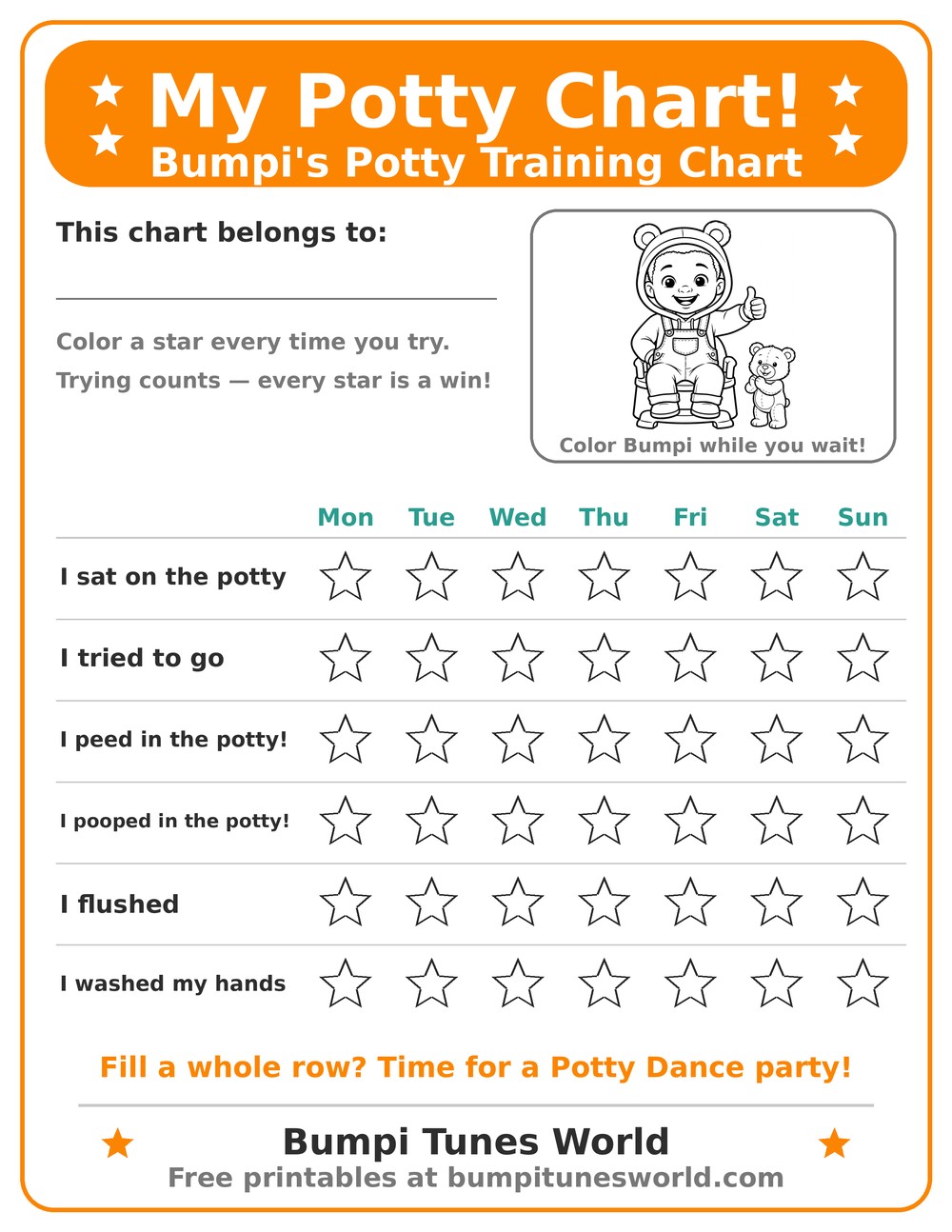
Potty training runs on small wins, but small wins are easy to forget by Wednesday. A chart fixes that. It turns invisible progress into something your toddler can see, touch, and color — and it gives you a calm, consistent way to celebrate effort without turning every potty sit into a negotiation. This free printable pack is the chart we recommend alongside our stress-free potty training guide: one week, six milestones, forty-two stars, and a Potty Dance party waiting at the end of every row.
What's inside the free pack
- Page 1 — My Potty Chart. Six milestone rows (sat on the potty, tried to go, peed, pooped, flushed, washed hands) with seven stars each — one for every day of the week. The top of the page has space for your child's name and a picture of Bumpi on his potty to color while they sit and wait.
- Page 2 — Bumpi's Potty Time. A color-and-trace page: color Bumpi on the potty, trace the word POTTY, and count the stars.
- Page 3 — Potty Practice Page. Color Bumpi washing his hands, match bathroom items to what they're for, and color a star every time your child tries.
Download the free potty chart pack (PDF)
The pack is a standard US Letter PDF — print it at 100% scale on any home printer. Black and white on purpose: the coloring is part of the activity, and one sheet a week won't drain your ink.
Get new printables by email
The chart is free with no email needed, ever. But if you'd like new Bumpi printables sent to you as they land — including Bear Buddies Club packs as they're released — join the Bumpi Tunes World email list:
About one short, friendly email a month — never spammy, unsubscribe anytime.
How to use the chart
1. Put it where the potty is. Tape the chart to the bathroom wall or door at your toddler's eye level, with crayons or stickers in a cup nearby. A chart in the kitchen is a poster; a chart by the potty is a tool.
2. Start with the first row. The chart is ordered the way the skill actually builds. "I sat on the potty" comes first because sitting calmly is the first skill. Don't skip ahead to pressuring for pee stars — the top rows are where confidence is built.
3. Color a star for every try. Your child colors the star (or places the sticker) themselves, right after the sit. The rule that matters most: trying counts. They sat, they tried, they get the star — whether or not anything happened. That's the same "celebrate effort, not just results" approach from our potty training guide, and it's what keeps kids willing to try again tomorrow.
4. Anchor sits to the day, not to asking. Instead of "do you need to go?" on repeat, attach potty sits to moments that already happen: right after waking, before leaving the house, before bath, before bed. The chart fills fastest when sits are routine. Our favorite sit-time trick: play The Potty Dance — a two-minute song that gives toddlers a wiggle to do while they wait.
5. Celebrate the full row. When a row fills up, mark it the way the chart suggests: a Potty Dance party. Ten seconds of dancing in the bathroom doorway beats a prize bin — it's warm, it's immediate, and it costs nothing.
Reward milestones that actually work
The milestones are already built into the rows, so you don't need a reward menu. First star ever: big deal, photo-worthy. First full row: dance party. First star in the "I peed in the potty!" row: tell Grandma. A full week of handwashing stars: your child has built a real hygiene habit — name it out loud. Keep praise warm and proportional. What to skip: food rewards (they make the potty about treats), and comparing siblings or friends (it makes the potty about pressure). If the stars lose their magic after a few weeks, that's usually good news — the routine has taken over, which was the goal all along.
Quick tips before you print
- Check readiness first — staying dry for an hour or two, showing interest in the bathroom, and disliking wet diapers are the classic early signs.
- Keep accidents boring: "Accidents happen. Let's clean up." Then back to the routine.
- Expect pee to click before poop — poop on the potty feels strange to many toddlers, and patience (plus fiber and water) beats pressure.
- Print next week's chart before this one runs out, so a good streak never hits a gap.
Potty chart questions
What age is this potty chart for? The chart is designed for toddlers showing potty readiness signs, which most children show somewhere between 18 months and 3 years. If your child can sit on the potty and enjoys coloring or stickers, they are ready for the chart — even if nothing has landed in the potty yet.
My child colors the stars but doesn't want to sit. Is that okay? Yes — that is the chart working. Sitting is the first milestone on the chart for a reason. Let them color the picture of Bumpi, keep potty sits short and pressure-free, and celebrate any sit at all. Interest in the chart usually turns into interest in the potty.
How long should we use the chart? Print a fresh chart each week. Most families use a chart for three to six weeks, until the routine feels normal and the stars matter less than the habit. Keep the finished charts — toddlers love seeing a whole wall of proof.
What if nothing lands in the potty yet? Then the top rows of the chart are doing the heavy lifting: "I sat on the potty" and "I tried to go" earn stars too, because effort is what builds the skill. If weeks pass with strong resistance, it is fine to pause and try again in a month — our potty training guide explains how.
More Bumpi printables are on the way from the Bear Buddies Club. Until then, everything printable on this page is completely free — print as many copies as your training season needs. When you're ready for the full calm, step-by-step plan behind the chart, read our stress-free potty training guide, and meet the song that goes with it on The Potty Dance song page.